


Taxes:
What are they, where do they come from, and why do they annoy us so much? 💸🤔
Introduction: What are taxes and why can't we escape them? 💼💥
Today we are going to discover everything about taxes: their history, relevant characters, and some places where things have gotten interesting. But don't worry! We will do it in a light way, because, believe it or not, taxes can even be entertaining! 🎢📊
What are taxes?
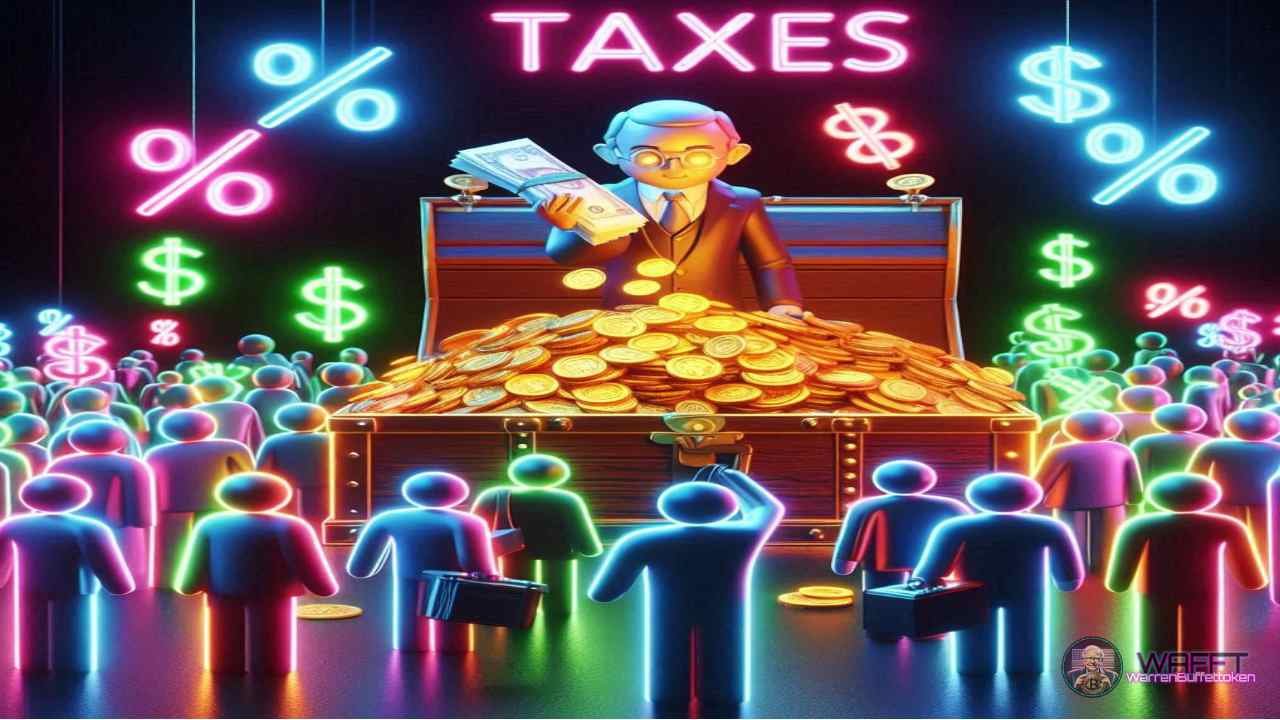
Taxes are mandatory payments that people and businesses make to the government. They are not like a purchase, where you receive something tangible in return immediately, but are used to fund services and projects that benefit us all. Yes, even if you don't notice it right away, taxes are working for you! 🚧👷
When you pay taxes, that money goes directly to the coffers of the State (whether national, provincial, or local) and is used to cover a wide variety of expenses that make society function properly. It is a kind of common fund where we all contribute a little bit so that the government has the necessary resources to fulfill its responsibilities.
What are taxes for?
The big question is: what do they do with my money? The answer is that taxes serve many important purposes that help make everyday life safer, fairer, and better organized.
Here is a list of some of the main uses:
1. Basic public services 🏥📚
The government uses taxes to fund essential services like health, education, and public safety. Imagine a world without public hospitals or free schools. It would be chaos! 😵
2. Infrastructure 🚧🏗️
Another important part of tax money is used to build and maintain roads, bridges, airports, transportation networks, and other infrastructure. And yes, the street lights that guide you at night are part of this too. 💡
3. Social security and pensions 👵👴
Taxes also help fund social security systems and pensions. This means that when people retire or when someone is unable to work for some reason, the state can provide them with financial support.
4. National defense and security 🔒
Maintaining an army and security forces to protect the country is expensive, and taxes cover this expense. Even though you don't directly see where that money goes, it is key to maintaining the sovereignty and security of your country against external and internal threats. It's like a giant insurance policy for the country! 🛡️
5. Economic development and research 🧪📈
Taxes also go to fund research, technology, and economic development projects. Things like scholarships, small business grants, or scientific research projects are covered with this money. Thanks to this, innovation is promoted and the country's economy is boosted. You never know when that money could be funding the next great scientific discovery! 🚀
6. Environmental Protection 🌱🌍
The money raised from taxes is also used to protect and care for the environment, for example, by funding the cleaning of rivers, forests, and the creation of national parks. In addition, resources are allocated to clean and renewable energy programs. Contributing with your taxes also helps us have a healthier planet. 🌳
7. Social Programs and Community Aid 💪
Many people in difficult situations depend on help from the State. Taxes allow the government to fund social assistance programs such as housing subsidies, food, employment programs, and more. Thus, the money we pay with taxes helps those most in need to get ahead. 🙏
Types of taxes: Yes, there are more than one! 📊📝
There are several types of taxes that we pay, and some can be more complicated than others.
Here are the most common ones so you don't get lost the next time you hear about them:
Income tax 🤑:
This is the classic one. The government takes a portion of what you earn from your job or business. It's proportional, meaning the more you earn, the more you pay (or so it should be…).
Indirect taxes 🛒:
These are the ones you pay without realizing it, like when you buy something in a store. The famous VAT (Value Added Tax) is an example of this. The more you buy, the more you pay.
Wealth taxes 🏡:
If you own property, like a house or land, this is the tax you pay for owning those assets. So, if you've bought yourself a medieval castle (because of course, who hasn't?), be prepared to shell out. 🏰💸
Which countries have the highest taxes? 🌎📈
If you thought your country had high taxes, wait until you hear this!
Denmark 🇩🇰:
Danes pay one of the highest income taxes in the world, reaching up to 55%. However, in exchange they have free education and healthcare, and an enviable standard of living. Not bad for those taxes! 🏥🎓
Sweden 🇸🇪:
Sweden is another country with high taxes, but also with a great social welfare system. The top tax rate can reach 57%. But paid vacations and maternity leave are a dream! 👶🏖️
France 🇫🇷:
Here taxes are also high, especially on work and companies. However, the French enjoy a very generous welfare system, with social security and pensions that are the envy of many. 🥖🍷

Tax Revolutions: When Things Get Ugly ⚔️💥
Throughout history, taxes have been a cause of conflict and, in some cases, even revolutions.
Here are two famous examples:
The American Revolution 🇺🇸:
As we mentioned before, one of the main reasons for the independence of the United States was anger at the high taxes that Great Britain imposed on the colonies without giving them representation in Parliament. No taxes without a voice! 🗣️💥
The French Revolution 🇫🇷:
In 18th century France, the poor paid most of the taxes, while the rich and the clergy were practically exempt. This, coupled with an economic crisis and a series of bad harvests, was one of the factors that triggered the French Revolution. People got tired of supporting the aristocracy while they were starving. 🔥⚔️
Conclusion: Taxes, a necessary evil... or not so much? 🤷♂️
The important thing is that these taxes are handled fairly and efficiently, something that, unfortunately, does not always happen. But whether you live in Denmark with sky-high taxes and luxury services, or in a country where you wonder where all the money collected goes, taxes will continue to be a fundamental part of our lives.
So next time you pay taxes, just think: you are contributing to making your country work (or at least, we hope so)! 😅🔄
The History of Taxes: From Antiquity to Today 🏛️💰
Taxes are a fundamental part of life in society, and although we often don't get too excited about paying them, they are as old as civilization itself. From the earliest empires to modern global economies, taxes have been an essential way to fund governments and public services.
Let's explore how taxes have evolved throughout history, in a fascinating journey spanning thousands of years. Get ready for a trip back in fiscal time! ⏳✨
The first taxes in ancient times 📜
The history of taxes begins in ancient times, long before the existence of paper bills or coins that we use today. The first tax systems date back to Mesopotamia, around 3000 BC, in the Sumerian Empire. At that time, taxes were not paid with money, but with agricultural products, livestock or work. This type of "tribute" helped support the ruler, public works and the first bureaucracies. Imagine paying your taxes with goats! 🐐💼
Taxes at this time were collected in a rudimentary way, but the idea was clear: if you wanted to live in an organized society, you had to contribute. This concept spread to other ancient civilizations such as Egypt, Babylon and China. In Egypt, for example, the pharaohs collected taxes on crops, and the famous "tithe" consisted of paying 10% of the production to the State. Instead of tax auditors, the Egyptians used scribes to record every transaction. 🏺✍️
Taxes in Ancient Rome 🏛️
The Roman Empire perfected tax collection and created one of the most advanced tax systems in antiquity. In Rome, there were taxes on land, slaves, inheritance, and even the sale of goods. One of the most well-known taxes was the tributum, a levy imposed on Roman citizens to fund military campaigns. However, the Romans also pioneered something many of us are familiar with today: indirect taxes.
Rome imposed taxes on trade and transactions across its vast empire. Public officials (known as "publicans") were in charge of collecting these taxes. Sometimes, they were given a bad reputation for being too harsh or corrupt, a problem that seems to have followed tax collection for centuries. 💂♂️💰
Taxes in the Middle Ages: From Feudalism to Tithes 🏰
During the Middle Ages in Europe, the tax system changed with the advent of feudalism. Instead of paying taxes in cash, peasants and serfs often paid their feudal lords with labor or agricultural products. This "tax in kind" system sustained the power structure of the time.
On the other hand, the Church also played an important role in tax collection. Parishioners were expected to pay a tithe of 10% of their income or property to fund the Church's activities. Religion and taxes were closely intertwined during this time, and the church became a powerful economic institution. ⛪💸
Taxes in the Modern Age: Industrial Revolution and New Challenges 🏭
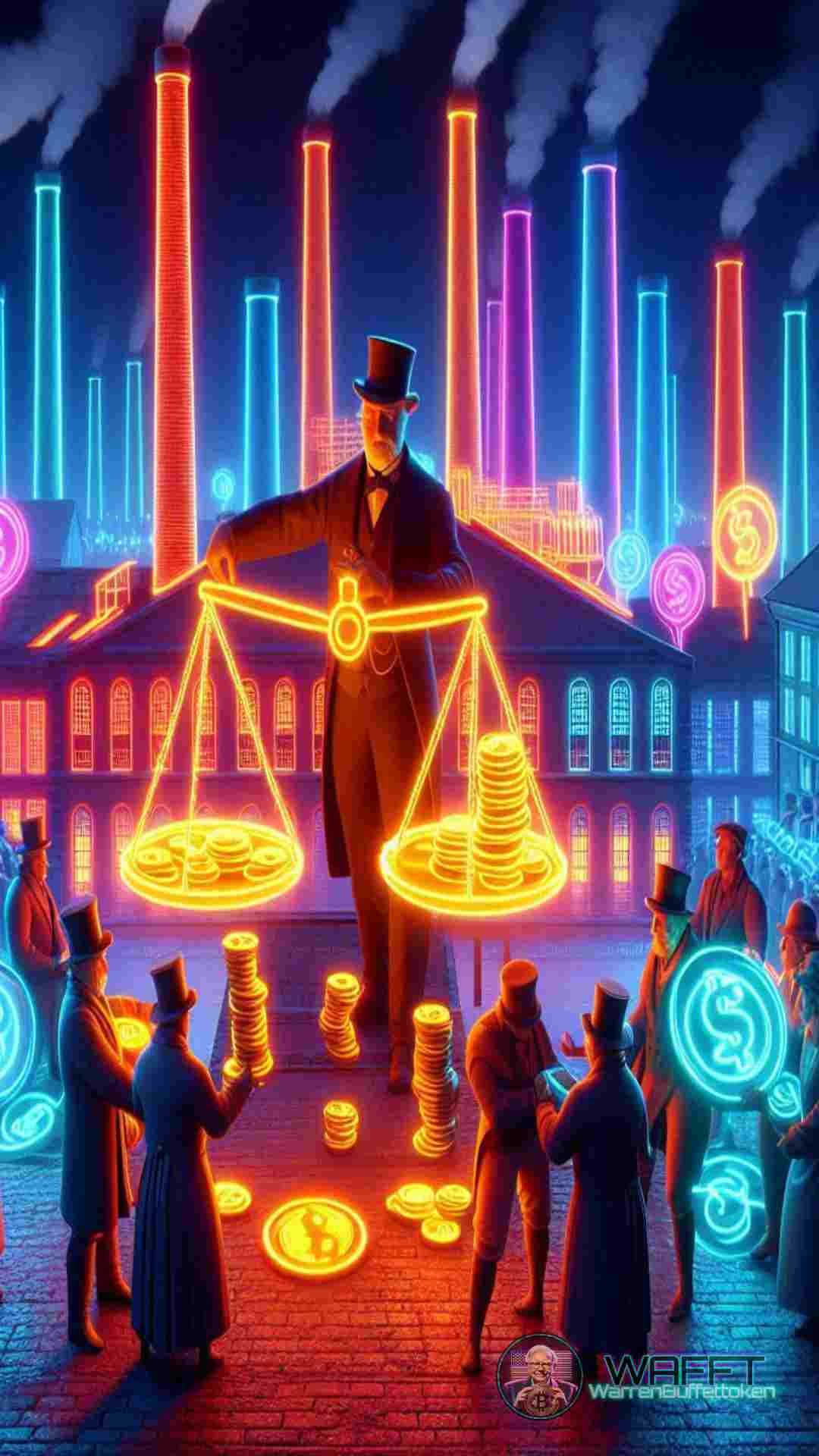
With the arrival of the Industrial Revolution in the 18th and 19th centuries, the role of taxes changed again. Societies became more complex and governments needed more revenue to build infrastructure, maintain larger armies and develop public services. It was during this time that income taxes began to be established, which remain one of the pillars of the current tax system.
The modern income tax was first introduced in the United Kingdom in 1799 to fund the Napoleonic Wars. This system soon expanded to other countries such as the United States, where it was formally established in 1913 with the 16th Amendment to the Constitution. This tax allowed governments to raise money more equitably, based on what each person earned. 💵📈
The 20th Century: Taxes to fund wars and welfare 🌍
During the 20th century, especially during the two World Wars, taxes increased in many nations. Governments needed funds to fund conflicts and rebuild their countries after the war. This led to greater state intervention in the economy and the creation of more progressive tax systems, where the richest paid a greater proportion of their income.
In the post-war period, taxes were also used to fund the growth of welfare states. In countries such as the United Kingdom and Scandinavian nations, high-tax systems were implemented to fund free or low-cost public services such as health, education and pensions. These models were based on the idea that taxes could be used to reduce economic inequalities and ensure a better quality of life for all. 🏥🏡
Taxes in the 21st Century: New Challenges and Digital Technologies 💻📊
Today, taxes remain a crucial issue in global politics and economics. Globalization and digitalization have brought new challenges. Multinational companies sometimes use tax tricks to pay less tax, shifting their profits to tax havens. This has sparked debates on how to make large companies pay their fair share in the globalized world. 🌐💼
In addition, with the rise of digital technologies and cryptocurrencies, governments are trying to find ways to regulate and tax transactions that occur online or outside traditional financial systems. New discussions are emerging on how to tax technology companies and how to adapt tax systems to the digital economy of the 21st century.
Conclusion: A necessary evil or a tool for progress 💡?
Throughout history, taxes have been an essential tool for keeping societies running, even if they have not always been popular. They have funded everything from empires to modern states and have been the driving force behind the creation of infrastructure, public services and the reduction of inequalities. Despite their bad reputation, taxes remain crucial for ensuring collective well-being and economic development. (As long as governments do not misuse the funds)💪🌍
The Most Relevant Figures in the History of Taxes: The "Heroes" and "Villains" of Public Money 🏛️💰
Taxes have been an essential part of the functioning of societies since the dawn of civilization, and over the centuries, some figures have played key roles in their evolution. From emperors and revolutionary leaders to modern economic thinkers and politicians, these figures have left a lasting mark on the way public money is collected and used.
In this article, we will explore the most relevant figures in the history of taxes, who, for better or worse, set the course of the tax system.👨🏻🎓
1. Hammurabi (1792–1750 BC) 📜
Who was he? Hammurabi was the sixth king of Babylon and is best known for his famous Code of Hammurabi, one of the earliest collections of written laws in history.
Contribution to Taxation:
- The Code of Hammurabi included tax laws that regulated tribute and the tax obligations of citizens. These laws established a basis for early tax systems and laid the groundwork for how kings in ancient Mesopotamia and other later civilizations collected tribute from their citizens.
Historical Impact:
- Although his focus on taxation was more related to tribute and property, Hammurabi helped frame the notion that citizens had to contribute to the sustenance of society through their goods and production.
2. Julius Caesar (100–44 BC) 🏛️
Who was he? Julius Caesar was one of the most famous generals and dictators of ancient Rome, known for his conquests and political reforms that transformed the Roman Republic.
Contribution to Taxation:
Caesar reformed the Roman tax system significantly. Before him, tax collection was in the hands of publicans, private contractors who often abused their power. To end corruption, Caesar reformed the system so that tax collection was under government control, limiting the power of publicans and improving fiscal efficiency and fairness.
Historical Impact:
Caesar's reforms laid the groundwork for more centralized tax administration, a feature that was essential to the financial stability of the Roman Empire and many other states that adopted a similar approach in the future.

3. Robin Hood (Medieval Legend) 🏹
Who was he? Although Robin Hood is more of a legendary figure than a historical character, his story has a strong link to taxes. According to legend, Robin Hood was an outlaw who stole from the rich to give to the poor.
Contribution to taxes:
Robin Hood symbolizes resistance against tax oppression. In legend, the evil Sheriff of Nottingham imposes high taxes on peasants, and Robin Hood fights against tax injustice by redistributing wealth stolen from the powerful. Although he never existed in real life, his story highlights the discontent that poorly administered or unfair taxes can cause.
Historical impact:
Although fictional, Robin Hood has inspired generations with the idea that taxes should be fair and should not serve to enrich rulers at the expense of the most vulnerable.
4. Adam Smith (1723–1790) 📚
Who was he? Adam Smith was a Scottish economist and philosopher, considered the father of modern economics. He is best known for his most famous work, The Wealth of Nations.
Contribution to taxation:
Smith established four fundamental principles of taxation that are still used today: equity, certainty, convenience, and efficiency. In his view, taxes should be proportional to each individual's ability to pay, clear in their implementation, easy to pay, and not interfere too much with economic
development.
Historical impact:
His approach to equity and simplicity in taxation was revolutionary for its time. Many of Smith's ideas about how taxes should be structured remain the basis of modern tax policies.
5. Benjamin Franklin (1706–1790) 🇺🇸
Who was he? Franklin was one of the Founding Fathers of the United States and is known for his influence on the American Revolution, as well as his wisdom and humor.
Contribution to taxation:
Franklin was not a direct tax reformer, but his famous line “Nothing is certain but death and taxes” underscores the inevitability of taxes in the life of any organized society. Franklin played a key role in tax negotiations between the American colonies and Great Britain. He was directly involved in discussions about taxation that led to the American Revolution, such as the famous complaint of “no taxation without representation.”
Historical impact:
Franklin helped shape American colonists’ resistance against British taxation without representation, leading to American independence. His thinking on taxation helped define a new era of fiscal freedom in the modern world.
6. Karl Marx (1818–1883) 📖
Who was he? Karl Marx was a philosopher, economist, and social theorist who co-wrote "The Communist Manifesto" and is considered the father of communism.
Contribution to taxation:
Marx saw taxation as a tool for redistributing economic power. In his communist ideal, progressive taxation would play a crucial role in eliminating class differences. He proposed a highly progressive tax on income to reduce the accumulation of wealth among the upper classes and promote an equitable distribution of resources.
Historical impact:
Although his ideas were not widely applied until long after his death, Marx's concepts influenced the tax policy of many communist and socialist countries. Even in modern capitalist systems, the progressivity of taxation is a partial reflection of his ideas on economic redistribution.
7. Franklin D. Roosevelt (1882–1945) 🇺🇸
Who was he? Roosevelt was the president of the United States during the Great Depression and World War II, and is known for implementing "the New Deal", a set of economic and social reforms.
Contribution to taxes:
During his presidency, Roosevelt increased taxes on higher incomes to fund social welfare programs and to combat the economic crisis. Under his mandate, much more progressive taxes were introduced, with marginal rates reaching up to 94% for the highest incomes during World War II.
Historical impact:
Roosevelt changed the way taxes are perceived in the United States, using them as a tool for social welfare and redistribution. His tax policies were key to the construction of the welfare state in the United States, which remains in force to this day.
8. Margaret Thatcher (1925–2013) 🇬🇧
Who was she? Thatcher was the first woman to become Prime Minister of the United Kingdom and was a key figure in the global conservative movement during the
1980s.
Contribution to taxes:
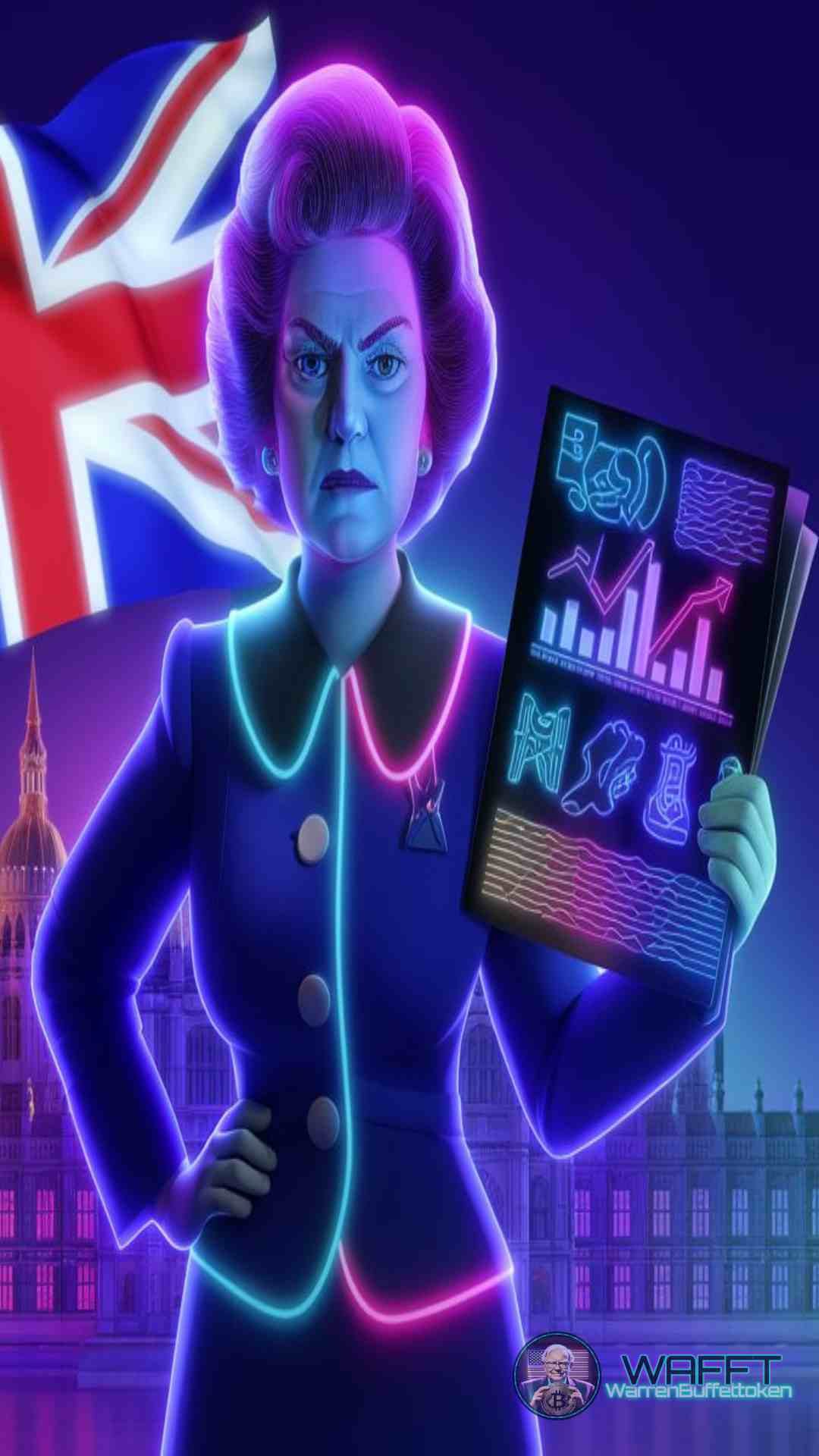
Thatcher promoted a policy of reducing taxes on income and capital, favouring less government intervention in the economy. However, her attempt to introduce a poll tax (a flat tax per person), known as the "poll tax", sparked huge protests across the UK.
Conclusion: The Architects of the Global Tax System
Throughout history, taxes have been shaped by emperors, economic thinkers, revolutionary leaders, and modern politicians. Whether designed to fund wars, build nations, or redistribute wealth, taxes have been a tool of power and social change.