


Deficit and Surplus:
The financial "chewing gum" of governments 💸🍬
What is this about deficit and surplus? 🤔
Surely you have heard more than once that a country has a "giant deficit" or that it has achieved a "historic surplus". But what does this really mean? And why does it seem that governments are always talking about these two little words as if they were their best friends (or enemies)? 🤯
Today we are going to unravel the mystery! We are going to explain it to you in a simple way and with examples, because understanding these concepts does not have to be boring. 🎉
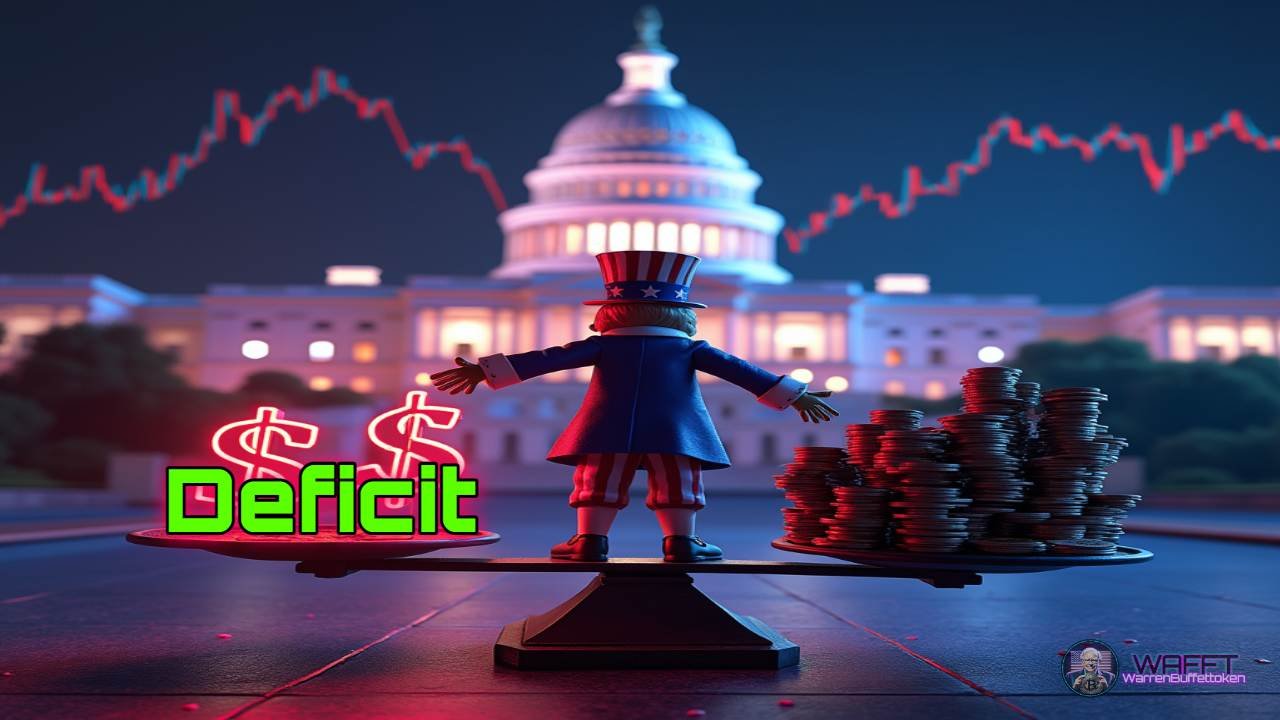
Deficit: When money is not enough 💸🚫
A deficit is basically when a government spends more than it earns. It's like if at the end of the month you realize that your salary is not enough to cover all your expenses, and you end up borrowing or using your credit card. 🔥💳
Imagine that the government has to pay salaries to officials, build roads, maintain hospitals and schools, and also buy a lot of other things. (Like embezzling funds😤) But... what happens if it collects less money (especially from taxes) than it needs to cover all those expenses? Well, that's where the deficit appears. 🙃
In simple terms:
Income (money the government receives) < Expenses (money the government spends) = Deficit.
When this happens, the government has two options:
1. Borrowing:
- Either by issuing bonds or by borrowing from other countries or financial institutions. It's like when we ask for a personal loan. 💼🏦
2. Tightening the belt:
- This can mean cutting expenses, raising taxes, or both, which can be very unpopular with citizens. 😬✂️
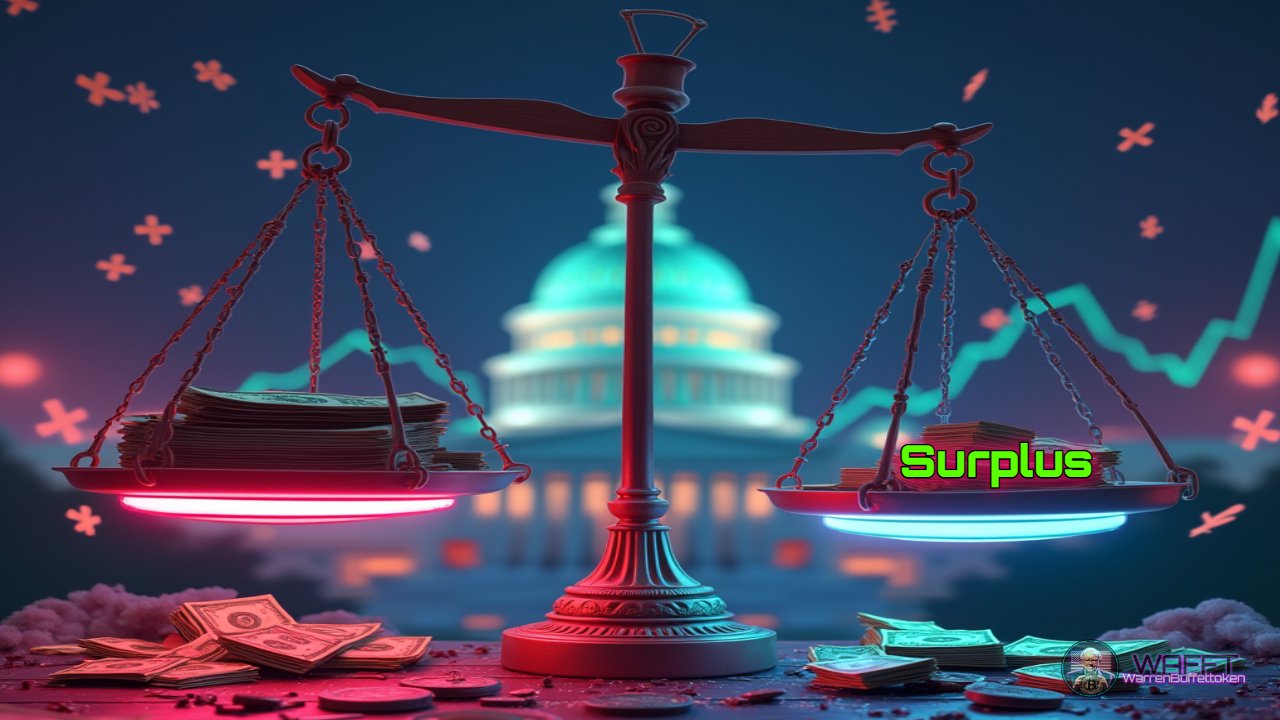
Surplus: When there's money left over! 💰🎉
Surplus is the opposite. This happens when the government collects more money than it spends. Yes, it can happen sometimes! It's like if at the end of the month you realize that after paying all your bills, you have extra money left in your pocket. 🤑💸
Imagine the government making its "shopping list" of expenses and, after all that, it has money left over. This would be a fiscal surplus.
So, in simple terms:
Revenue (money the government receives) > Expenses (money the government spends) = Surplus.
A government that has a surplus can do things like:
1. Pay off debts:
- If the country owes money (and believe me, almost everyone does), it can use that surplus to pay off outstanding debts. 💸✉️
2. Save:
- Yes, governments can also save for a rainy day, although it's not usually as common as it should be. 😅
3. Invest:
- Spend that money on projects that can generate more economic growth in the long run. 📈🚀

Why can a country have a deficit or a surplus? 📊
Both deficits and surpluses depend on many variables, and some of the most important ones are:
Economic growth 🌱:
When the economy grows, people earn more money, and therefore the government can collect more in taxes. This can lead to a surplus. But if the economy is in crisis or not growing, government revenues fall, and that's where the deficit appears.
Fiscal policies 🏛️:
some governments decide to spend a lot to boost the economy or improve public services, even though this may generate a deficit in the short term. Others are more conservative and prefer to save or reduce spending, sometimes achieving surpluses.
Unforeseen events 🌪️:
Natural disasters, pandemics (COVID-19 sounds familiar to you, right?), or wars can force a country to suddenly spend a lot, creating a deficit even in good times.
Countries and Their Relationship with Deficits and Surpluses 🌍💰
In the complex world of international finance, every country has its own history with deficits and surpluses. Let's explore how some of the world's most influential economies manage their fiscal balance sheets.
Get ready for a fascinating journey through national coffers! 🚀
United States 🇺🇸: The Deficit Giant🗽
The United States, the world's largest economy, has long been the undisputed deficit king. Since the 2008 financial crisis, the U.S. deficit has reached astronomical levels:
- In 2009, the deficit hit a record $1.4 trillion (yes, with a B).
- By 2020, due to the COVID-19 pandemic, the deficit soared to $3.1 trillion.
- Defense spending, social programs, and economic stimulus are the main drivers of the deficit. (Economic stimulus = turning on the printing press🖨)
Despite this, the US is still considered a safe investment due to its status as an economic superpower. However, the national debt, which exceeds $30 trillion, remains a cause for concern for many economists. 💵💣
Germany 🇩🇪: The Master of Surpluses👨🏼🎓
On the other end of the spectrum we have Germany, known for its fiscal discipline:
- Between 2014 and 2019, Germany recorded consecutive budget surpluses.
- In 2019, the surplus reached 13.5 billion euros.
- The "schwarze Null" (black zero) policy has been a mainstay of the German economy.
However, the COVID-19 pandemic ended this streak in 2020, forcing Germany into a deficit. Yet its reputation for fiscal savings remains intact. 📈🇩🇪
Greece 🇬🇷: From Crisis to Recovery🏛️
Greece became the face of the European debt crisis in 2010:
- Greece's fiscal deficit reached 15.4% of GDP in 2009.
- Between 2010 and 2018, Greece received three bailout packages totaling 289 billion euros.
- Austerity measures pushed unemployment to 27.5% in 2013.
Since then, Greece has made significant progress. In 2019, it even recorded a small primary surplus. Greece's recovery is a story of economic resilience. 💪🇬🇷
Japan 🇯🇵: The Debt Enigma⛩️
Japan presents a unique case:
- It has the highest debt-to-GDP ratio in the developed world, exceeding 260%.
- Despite this, it maintains low interest rates and a stable currency.
- The Bank of Japan holds a large portion of the government's debt, complicating the picture.
Japan's situation defies many conventional economic theories and remains the subject of study for economists around the world. 🤔💴
China 🇨🇳: The Economic Equilibrist🐲
China, the world's second-largest economy, presents a complex picture:
- It has maintained controlled deficits, generally below 3% of GDP.
- However, total debt (including corporate and household debt) has grown rapidly.
- The Chinese government carefully balances economic growth with fiscal stability.
China's economic management is crucial to the global economy, given its role as the "factory of the world." 🏭🐉
Conclusion: A World of Fiscal Contrasts
As we have seen, each country has its own recipe for managing its finances. While some opt for deficit spending to stimulate growth, others prefer austerity and surpluses. There is no one-size-fits-all solution, and success often depends on a combination of economic, political, and cultural factors.
In an increasingly interconnected world, a country's fiscal decisions can have global repercussions. That's why understanding these dynamics is crucial to understanding the global economy as a whole. 🌐💼
What do you think? Do you think your country manages its finances well? Leave us your comment on social media! 📲
Key figures in the history of deficits and surpluses 🏛️💰

Talking about deficits and surpluses is getting into the middle of the eternal debate on how public finances should be managed. Do we spend more to stimulate the economy? Or do we tighten our belts to avoid going into debt? 🌍💸
Throughout history, several characters have left their mark on this dilemma, and here we tell you what unites them and what they contributed to the debate.
John Maynard Keynes 🇬🇧
The father of "spend when necessary." Keynes revolutionized economics by saying that, in times of crisis, the government should spend more, even if it meant going into the red. According to him, spending to revive the economy was like putting gasoline in the engine of the car when it is off. 🚗🔥
- What connects him to the deficit: He argued that creating deficits was not bad if it helped get out of a crisis. Better to spend and move the economy than to sit back and watch everything sink.
- Impact: He inspired plans like Roosevelt's New Deal and remains the guru behind modern economic stimulus.
Milton Friedman 🇺🇸
In the opposite corner we have Friedman, the fanatic of saving. 💼💵 For him, deficits were a recipe for disaster: inflation, debt and a government that spends more than it should. He believed that the economy would work better if governments spent only what they have (WAFFT thinks the same).
- What connects him to the deficit: He was the number one enemy of large and sustained deficits, saying that they were like a snowball that grows until it crushes everything. ❄️💥
- Impact: His approach influenced austerity policies and leaders like Thatcher and Reagan, who tried to control public spending.
Margaret Thatcher 🇬🇧
The "Iron Lady" was quite a character. 🔨💪 Thatcher came to power in an economically troubled UK and said, “Enough of deficits!” She cut social spending, privatised public companies and implemented measures to reduce public debt.
- What connects her to the deficit: For her, the deficit was the villain of the story. She believed that reducing it was key to long-term growth and stability.
- Impact: She transformed the British economy and made it clear that surpluses (or at least not overspending) are the way forward for those who believe in the free market.
Alexander Hamilton 🇺🇸
The financial genius who got the US economy going. 📝💳 As the first Secretary of the Treasury, Hamilton advocated using debt strategically: to invest in the country's future and strengthen its credit.
- What connects him to the deficit: Although he was not a fan of living in debt, he saw deficits as a useful tool if used wisely.
- Impact: He was a pioneer in showing how well-managed deficits can be an economic advantage.
Franklin D. Roosevelt (FDR) 🇺🇸
The president of the New Deal. 🛠️ During the Great Depression, FDR did not hesitate to run deficits (go into debt) to revive the economy, generate employment and build infrastructure. For him, government spending was the solution to the crisis.
- What connects him to the deficit: He used the deficit as a necessary evil to get the country out of economic disaster.
- Impact: He showed that spending more in difficult times can be the key to getting ahead, an approach that remains popular in times of crisis.
Ronald Reagan 🇺🇸
Reagan was something of a fiscal paradox: he lowered taxes but increased military spending, leading to historic deficits.💸⚔️ He bet that economic growth would offset those red numbers.
What connects him to the deficit: Although he did not plan it, his presidency showed how easy it is to fall into deficits when income is not enough to cover spending.
Impact: His approach divided opinions: is it better to stimulate growth or prioritize debt reduction?
What unites them 🤝
Although they had very different visions, all these characters shared something: a key role in managing deficits and surpluses. Each, in their own way, tried to solve the puzzle of how to balance public spending, debt and economic growth.
- Keynes and FDR: Defenders of controlled deficits to boost the economy.
- Friedman, Thatcher and Hamilton: Austerity as a priority (but with nuances).
- Reagan: An intermediate case, with policies that led to unexpected deficits.
Final reflection 💭
The debate is still alive: spend to grow or save to avoid problems? In the end, the key is to find a balance, learn from the past and adapt to the needs of each moment. 💡
Deficit or surplus? Which is better? 🏅
The big question! But the answer is... it depends. 🤷♂️
A controlled deficit is not always bad. Sometimes, governments need to spend more to revive the economy or face an emergency. However, if the deficit becomes chronic (such as spending uncontrollably with a credit card), it can be a big problem, because the country's debt increases and the interest becomes difficult to pay.
A surplus is ideal because it means that the government is spending less than it earns. However, an excessive surplus could also indicate that the government is not investing enough in the economy (although it is better to have than not to have... right?), leaving aside projects that could generate growth or improve the quality of life of citizens.
Conclusion: Deficit and surplus, two sides of the same coin 💸🪙
In short, deficits and surpluses are like government bank accounts: sometimes they are in the red, and other times they are in the green. The important thing is that, as in everything, there is a balance. Governments must spend when necessary (even if that means running deficits), but they must also save and reduce debt when things are going well.
So the next time you hear a politician talking about these terms, you'll know what they're talking about! 😎🔄