
Rewards Tokens 🎉
What Are Rewards Tokens?
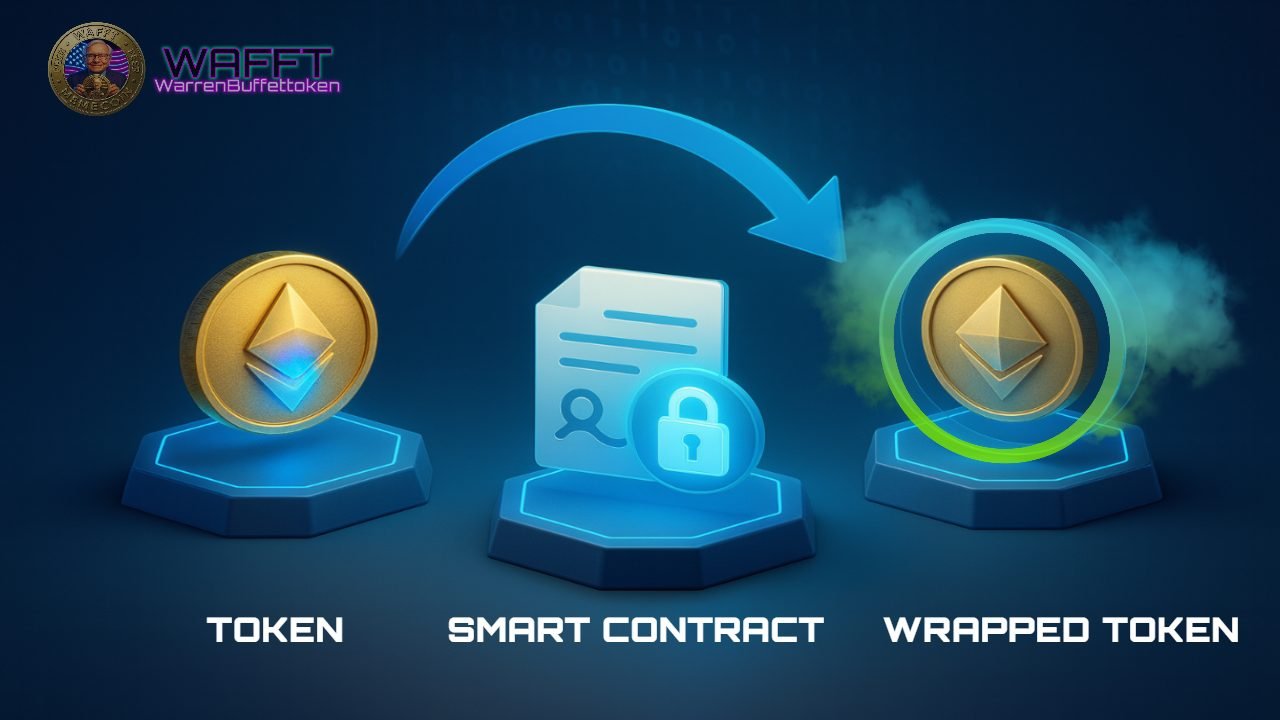
Rewards Tokens are the crypto equivalent of airline miles, supermarket points, or your credit card cashback — but with digital superpowers. ✨🪪
Instead of giving you a mug or a 5% coupon, they can open the door to a new ecosystem, grant you governance rights, or even multiply your returns.
These tokens are issued by protocols, companies, or communities to reward valuable behavior within their digital economies. It’s their way of saying:
“Thank you for participating, for trusting us, and for keeping the network engine running.”
🎯 Common Reward Examples
💧 Providing liquidity in a DeFi pool
🧱 Staking to help secure the network
🤝 Inviting friends (referral programs)
💼 Maintaining active dApp subscriptions
🪩 Participating in GameFi or SocialFi platforms
🎮 Main Types of Reward Tokens
Transferable (ERC-20): Can be traded, used as collateral, or spent.
- Non-transferable / Soulbound / Points: Track reputation or user activity.
- NFTs or Badges: Unique rewards with specific utilities.
💡WAFFT Take:
Rewards Tokens are the loyalty programs of the crypto world — but with programmable superpowers.
Instead of accumulating points in a private database, you accumulate real digital value on a public, auditable, and transferable blockchain.
In the WAFFT ecosystem, they embody the philosophy of “learn, contribute, and earn.”
Every action that strengthens the system can be recognized with tokens that don’t just hold value — they connect you with opportunity. 🚀
How Do Rewards Tokens Work?

Rewards Tokens act as the nervous system of Web3 economies: every useful action generates a “signal” that the protocol translates into value.
Behind each token are automated rules, smart contracts, and incentive mechanics designed to reward sustained participation.
🔹 Emission (Mint):
The protocol defines the on-chain rules (or sometimes in its backend) to decide when, how much, and to whom tokens are minted.
📌 Example: A DeFi protocol may issue 0.1 reward tokens per block to users who provide liquidity to the ETH/USDC pair.
✩ WAFFT+: Check whether there’s a supply cap or if it’s inflationary, whether issuance decreases over time (decay/halvings), or if it’s dynamic based on usage.
👉 Distinguish between “real yield” (sourced from fees/cash flow) and purely inflationary rewards.
🔹 Distribution:
Rewards are sent to wallets that meet certain criteria:
🧱 Contributed volume or locked time (staking, TVL).
🧭 Useful activity (using a dApp, referrals, completed missions, accumulation of non-transferable points or reputation).
🎯 Active subscriptions or maintained memberships.
✩ WAFFT+: Many protocols apply anti-Sybil filters (lists, verifications, proof-of-personhood) and weigh quality (retention, cost per action, cohorts) to prevent “fake usage.”
🔹 Vesting & Locks:
To avoid the classic “farm & dump” stampede, many tokens include vesting or lock periods:
⏳ Cliffs: Minimum time before the first unlock.
🔒 Linear vesting: Gradual release over time.
👉 This keeps incentives aligned between users and the protocol, strengthening ecosystem stability.
🔹 Utility:
The value of these tokens is not only monetary — but also functional:
💸 Fees & discounts: Reduces fees for using or staking the token.
⚡ Boosts: Increases your APR, priority, or visibility within the protocol.
🧠 Governance: Gives you voting power in decisions and fund distribution (grants, upgrades).
🛡️ Special access: From allowlists to VIP tiers or exclusive products.
✩ WAFFT+: Look for sinks that absorb supply (burns, locks, expenses in auctions/access) and buybacks funded by protocol fees; they improve long-term alignment.
📌 Example: A protocol may burn tokens weekly with a % of its fees and require their use for bidding in auctions, creating a demand sink.
🔹 Redemption or Conversion:
In some systems, points or non-transferable tokens can later be converted into real assets or perks:
🎁 Physical rewards, merchandise, discounts, premium subscriptions, or even transferable tokens with market value.
🔹 Claiming & Auto-compound (extra useful):
Imagine your rewards falling into a “digital piggy bank” — the blockchain itself. 🏦
🔸 Manual Claiming: You have to go to the dApp yourself, click a “Claim” button, and approve a transaction.
👉 Consequence: You pay a network fee (“gas fee”) for that action.
🔸 Auto-Compounding (via Vaults): The dApp does it automatically for you. Instead of sending you the rewards, it automatically reinvests them for you so you earn even more rewards on top of the total.
✨ Advantage: It’s like compound interest in traditional finance — but automated. You don’t have to lift a finger.
⚠️ Accounting & Taxes — Be Careful (VERY IMPORTANT)
🔸 “Taxable Event”: The moment when, by law, it’s considered that you’ve actually earned that money — and you may need to pay taxes on it.
🔸 Key point: In most jurisdictions, this moment isn’t when the rewards merely appear in your piggy bank, but when you actually claim them and take real possession (when they’re transferred to your wallet).
💡 Why it matters: If you’re using an auto-compound system that claims automatically, you could be triggering a taxable event without realizing it — even if you don’t see the funds in your main wallet. 💡
📚 Always check your local tax laws to stay compliant.
☆ WAFFTip: Always understand the fine print before your rewards turn into tax reports. 🧾😉
🧿 WAFFT Vision:
Behind the glamour of the “airdrop” lies pure incentive engineering.
Rewards Tokens are the invisible glue that keeps the crypto ecosystem alive — connecting users with protocols and making loyalty literal: on-chain. 🚀
Top Rewards Token Models & Use Cases
🚀 If you understand reward models, you understand why some dApps take off while others fade away.
In this section, you’ll see how they work ⚙️(mechanics), why they matter 💡 (incentives), and what to look for ⚠️ (typical risks) when applying them to your own strategy: liquidity, referrals, staking, loyalty, and more.
🌐 In the world of decentralized finance (DeFi), “reward tokens” are much more than just digital assets — they form the foundation that drives participation and protocol growth.
🎯 Each reward model is designed to solve a specific problem and align incentives between project creators and users. 👇 In this guide, we explore the most important and innovative models that have shaped the ecosystem, explained through tokens representative of each type.
You’ll discover how these projects reward their communities for:
🧱 Providing liquidity to markets
🪙 Locking tokens to secure the network
💫 Demonstrating loyalty and engagement
🤝 Bringing new users into the ecosystem
🧠 Creating content and value for the community
We’ll start with the most fundamental and widespread model: Liquidity Rewards.
🧱 Liquidity Mining / Trading Rewards
What are they? The most popular way to generate yield in DeFi. By supplying your assets to liquidity pools, you help exchanges operate and receive automatic rewards in return.
🔒 Basic mechanism:
🔸 You deposit two tokens (such as ETH/USDC) into a pool. In exchange, the protocol rewards you with its native token for keeping the market active and liquid.
🧩 Representative tokens of this model:
WAFFT Mini Warning ⚠️: Before jumping in, check emission vs. “real yield,” impermanent loss (IL) risk, liquidity depth, and token distribution/vesting. Always start small, measure slippage, and monitor your Health Factor if using leverage. 👀💡
🪙 Staking / Locking Rewards
What are they? Rewards for locking or delegating your coins to secure the network. In return, you receive yield generated from emissions, fees, and in some cases, MEV. If you use liquid staking, you receive a liquid token (LST) that represents your stake and can be used in DeFi.
🔒 Basic mechanism:
🔸 You delegate or lock your tokens in a validator/pool.
🔸 You receive periodic rewards (which vary depending on the network, validator uptime, and activity).
🔸 With LSTs, you maintain your yield while participating in DeFi (collateral, LPs, vaults).
🔸 Risks: slashing/penalties, withdrawal queues, LST peg/base stability, and smart contract risk if used as collateral.
🧩 Representative tokens of this model:
SOL — Native Rewards Token for Staking
CRV — Rewards Token for Stablecoin Liquidity
SUSHI — Rewards Token for Liquidity & Fee Sharing
GMX — Rewards Token with Real Fee Sharing
WAFFT Note📝: Before Locking Your Position
Before confirming any operation, follow this mini-checklist to earn without surprises:
1. ✅ Understand How to Exit: Check the withdrawal process. Are there waiting queues? Time limits?
2. ✅ Evaluate Your LTV: If you use Liquid Staking Tokens (LSTs) as collateral, monitor your Loan-to-Value ratio. A high LTV means liquidation risk!
3. ✅ Check Liquidity and the Peg: Make sure the LST you’re using has good liquidity on DEXs and that its price remains stable (pegged to its value).
Trade smart = Earn without surprises. 🦊💡
🪙 Staking / Locking Rewards
What are they? Rewards for locking or delegating your coins to secure the network. In return, you receive yield generated from emissions, fees, and in some cases, MEV. If you use liquid staking, you receive a liquid token (LST) that represents your stake and can be used in DeFi.
🔒 Basic mechanism:
🔸 You delegate or lock your tokens in a validator/pool.
🔸 You receive periodic rewards (which vary depending on the network, validator uptime, and activity).
🔸 With LSTs, you maintain your yield while participating in DeFi (collateral, LPs, vaults).
🔸 Risks: slashing/penalties, withdrawal queues, LST peg/base stability, and smart contract risk if used as collateral.