
Governance Tokens ⚖️
Table of Contents
1. What Are Governance Tokens?
2. How Governance Tokens Work
3. Top Governance Tokens & Their Use Cases
4. Why Do Governance Tokens Matter?
5. Things to Keep in Mind — Governance Tokens Reality Check
6. What’s Next? — Governance Tokens in the Wild Decade Ahead
7. Final Thoughts — Governance Tokens, the WAFFT Way
8. Discover More Token Types
What Are Governance Tokens?
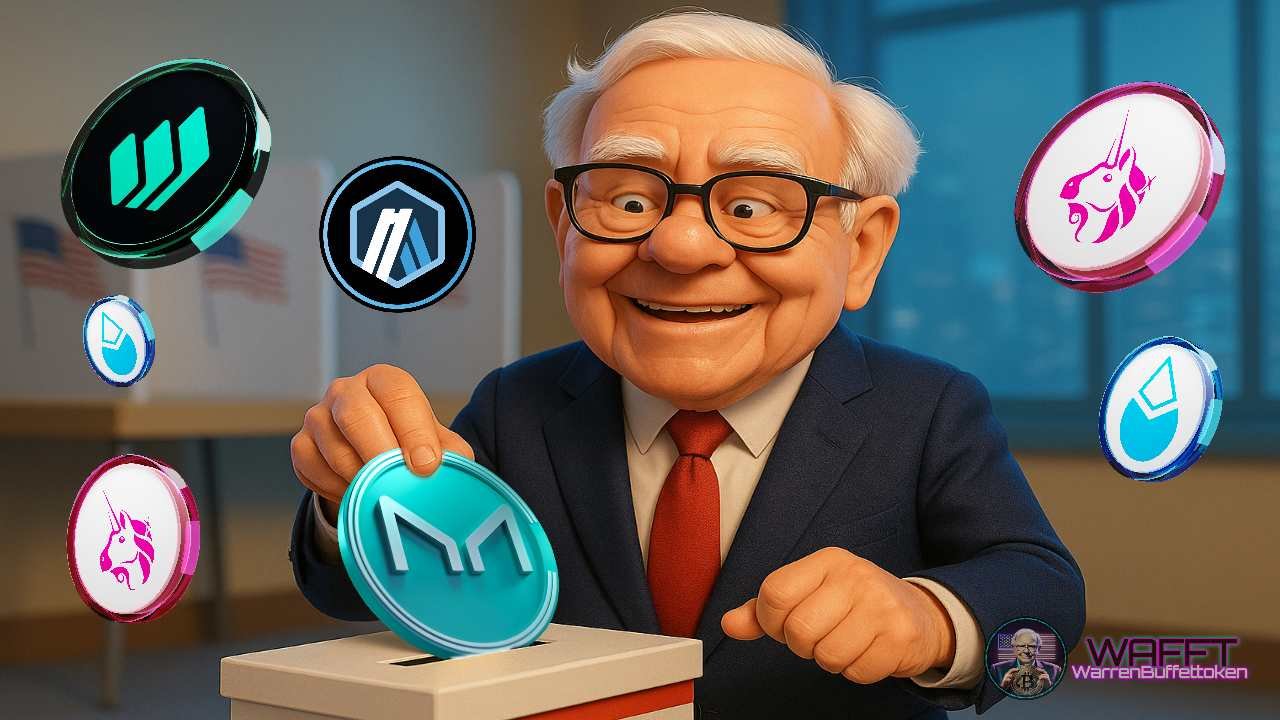
Governance tokens are crypto assets that give their holders the right to participate in decision-making within a protocol or platform—especially in the world of decentralized finance (DeFi). Instead of decisions being controlled by a small board of executives, these tokens empower the community to shape the project’s future, fostering true decentralization.
🛠️ Technical Essence (Without Getting Too Heavy)
How does this all work “behind the scenes”? Here are some key pillars:
Governance Smart Contract: Think of it as a digital brain that hosts proposals and tallies votes. Once the required quorum is met, the decision is automatically executed. 🧠
📦[WAFFT Explains]
What Is Quorum?
✩ Quorum is the minimum number of votes required for a proposal in a DAO to be valid and executable. It’s not enough to win the vote—you also need enough participation.
⚡️ Quick example: if a protocol requires 20% of all circulating tokens to vote and only 15% do, the proposal stays in limbo—even if everyone voted “yes.” No quorum, no upgrade.
💡 It's a key measure to ensure major decisions aren't made by just a handful of whales or insiders. It's on-chain democracy—with mandatory quorum. 🗳️⛔
1 Token = 1 Vote: This is the baseline model. Your voting power is directly proportional to the number of tokens you hold. 🗳️
Quadratic / Weighted Voting: To reduce the dominance of whales (large holders) and reward broader participation, some systems adjust the value of each vote. 🐳
Liquid Delegation: If you don't have time or interest in voting on every issue, you can delegate your voting power to a trusted delegate—and reclaim it at any time. 💦
Delegation Markets : Yes, there are platforms where small holders can lease their power to professional delegates in exchange for a reward. This has led to the rise of the "vote influencer." 💼
Timelock + Guardian Veto : Before an upgrade goes live, there’s a waiting period (timelock). A multisig guardian committee can freeze changes if bugs or critical issues are detected, adding a security layer. ⏳🛡️
Cross-Chain Governance : Concerned about gas costs on mainnet? With this tech, you can sign your vote on a cheap Layer 2 (L2) and a bridge will transmit it to the mainnet. Less gas, more participation. 🌉

🔑 Why Do They Exist?
Governance tokens arise from the need to:
Decentralize control: Goodbye closed boardroom! Rules are on-chain and anyone can propose changes. It's a more transparent and fair system. ⛓
Align incentives: If the protocol grows and succeeds, so does your token (and your voice). It's real “skin in the game”: everyone wins when the project thrives.

Fund innovation: Many protocols hold treasuries worth millions that can fund new dApps, security audits, or adoption campaigns. All major decisions are made through community vote. 💸

⚡ WAFFT Punchline:
“Yesterday, billionaires called the shots over dinner. Today, a DAO votes on protocol fees with you at the table. If you're not part of it, your wallet might still be—just not in your favor.” 😎⚖️
How Governance Tokens Work

So, you've got your governance tokens. What's next? Their power comes alive through specific mechanisms that allow you to directly influence the protocol's direction. 
🗳️ Empowering Your Voice
Holders can propose and vote on crucial changes to the protocol. This includes a wide range of decisions, such as:
Adjusting transaction fees: Directly impacting the cost of using the platform.
Adding new functionalities: Guiding the development roadmap and introducing new features.
Selecting development teams: Choosing who builds the future of the project.
Allocating treasury funds: Deciding how the community's shared resources are spent.
✵ Your influence here is typically tied to the amount of tokens you hold, giving more weight to those with a larger stake in the project’s success.
🛠️ Governance in Action: The Mechanisms
The act of governing can take different forms, depending on the protocol's design:
On-Chain Governance: This is the most transparent and immutable form. All proposals and votes are executed directly on the blockchain, ensuring full visibility and trustlessness. Once a vote passes the quorum, the smart contract automatically implements the decision.
Off-Chain Governance: In this model, discussions and initial voting often occur on external forums or platforms like Snapshot. While the voting itself isn't directly on the blockchain (saving gas fees), the results are typically used to inform and trigger an eventual on-chain transaction or a multi-signature execution, formalizing the community's decision.
💫 Example: Many DAOs use Snapshot to gauge community sentiment before executing a vote on-chain, blending efficiency with transparency.
💡 Some protocols also employ quadratic voting or delegate models to balance voting power and ensure small holders can still influence outcomes.
(Curious about what those mean? Check the WAFFT Explains box below — if not, just scroll on and flex your governance muscles 🧠💪). ⬇︎
📦[WAFFT Explains]
Quadratic Voting & Delegate Models
☆ The terms "quadratic voting" and "delegate models" are governance mechanisms designed to balance voting power in decentralized systems like DAOs or blockchain protocols. Their goal: prevent large players from dominating decisions and give smaller participants more influence.
Let's break down each:
🟣 Quadratic Voting (QV)
🔍 Key Concept:
✺ The cost of voting for a proposal increases quadratically with the number of votes a user casts for that proposal. This allows users to express the intensity of their preference but limits power concentration.
📐 How It Works:
Each user receives "voting credits" (not proportional to their tokens).
To cast multiple votes on the same proposal, the credit cost increases exponentially:
1 vote = 1 credit
2 votes = 4 credits (2²)
3 votes = 9 credits (3²)
n votes = n² credits
💡 Example:
If you have 10 credits:
You can't cast 10 votes on a single proposal (cost: 10² = 100 → ❌ not enough).
But you can cast 3 votes on proposal A (cost: 9 credits) and 1 vote on proposal B (cost: 1 credit).
🎯 Objective:
Enable small holders to strongly support proposals they care about.
Prevent large holders from monopolizing decisions due to the high cost of concentrating votes.
🌟 Advantage:
Better reflects the intensity of community preferences, not just economic weight.
🟢 Delegate Models
🔍 Key Concept:
✺ Users can delegate their voting power to others (expert delegates or representatives) instead of voting directly.
👥 How It Works:
A user with few tokens (or little time) delegates their votes to a trusted delegate (e.g., a technical expert).
The delegate votes on behalf of all who delegated power to them.
Delegation can be:
Temporary (revocable at any time).
Specific (only for certain proposals).
💡 Example:
Buffett has 100 tokens but doesn't understand blockchain security.
He delegates her votes to Bob (a cryptography engineer).
Bob votes on technical proposals using the votes of Buffett and other delegators.
🎯 Objective:
Allow small holders to influence decisions without being constantly active.
Make decisions more informed: delegates are usually experts.
Reduce "voter fatigue" in large communities.
🌟 Advantage:
Combines representative democracy with efficiency and specialized knowledge.
⚖️ Why Are They Used in Decentralized Protocols?
🛡️ Prevent Plutocracies: If voting is purely based on token quantity, "whales" (large holders) control everything.
🌍 Inclusivity: Small participants impact key decisions.
🧠 Decision Quality: Delegation → more informed votes; Quadratic Voting → real preferences.
⚠️ Challenges:
Quadratic Voting: Mathematical complexity, susceptible to "bot" attacks (creating multiple accounts).
Delegation: Risk of centralization if few delegates concentrate power.
🌐 Real-World Cases:
Quadratic Voting: Used in Gitcoin to fund public impact projects.
Delegation: Implemented in Uniswap, Compound, and other DAOs.
🎯 Conclusion:
✺ Both models aim for fairer and more efficient governance, where capital isn't the sole influence factor. They're key pillars for democracy in Web3! 🗳️
🎁 Getting Involved: Distribution & Participation
Governance tokens make their way into users' hands through various channels:
Airdrops: Free distributions to early users or community members. 🥇
Staking rewards: Earning tokens by locking up other crypto assets. 🚫
Liquidity mining incentives: Receiving tokens for providing liquidity to decentralized exchanges. ⛏️
Direct sales or early funding rounds: Purchasing tokens during initial offerings. 🌟
💬 Engagement Tips:
Some protocols offer voting rewards or reimburse gas fees to encourage participation. ⛽️
Tools like Tally, Aragon, or Boardroom can simplify the governance process for newcomers. 🚴♂️
Active participation isn't just encouraged—it's essential. If you own governance tokens, your vote is your voice, and using it helps shape a protocol's future and ensures it evolves in the best interest of its community. Your engagement literally dictates the path forward.



WAFFT Mantra:

"Big Tech votes behind closed doors. In Web3, your wallet is your voice. Use it—or someone else will govern your assets for you." 🗳️🧠💥
Top Governance Tokens & Their Use Cases
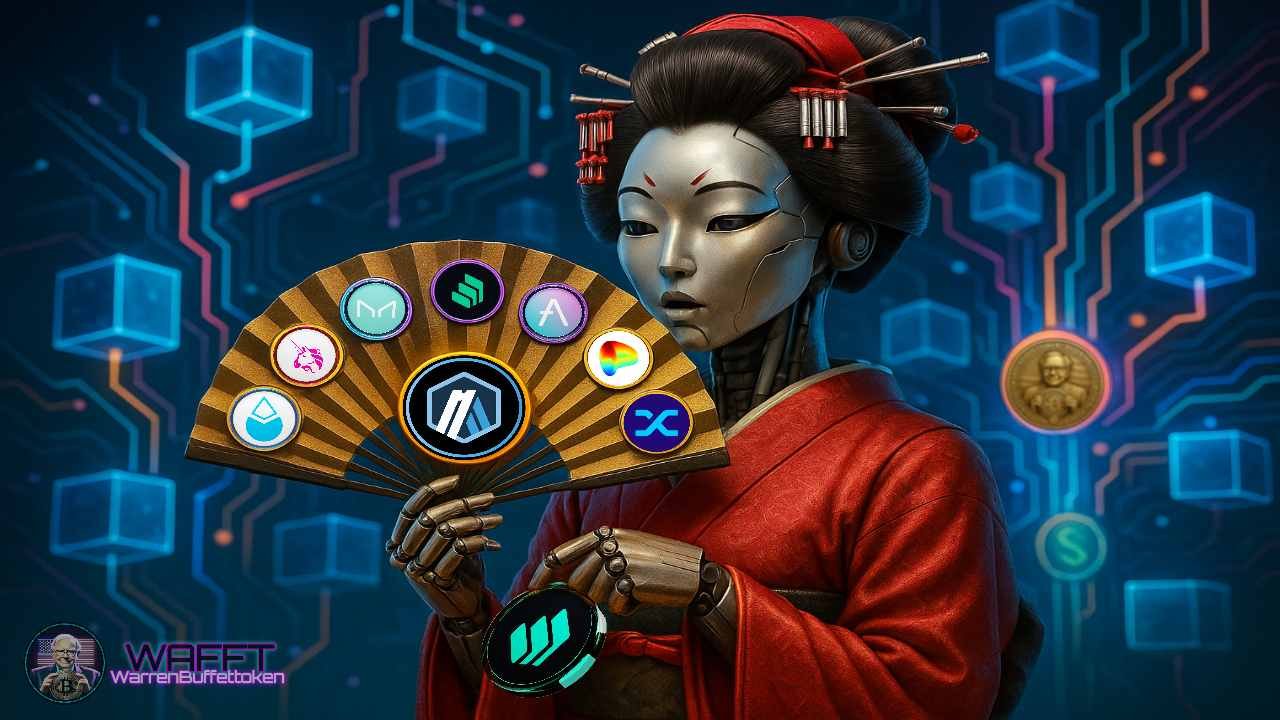
Now that we understand what governance tokens are and how they function, let's explore some prominent examples in the crypto ecosystem and how their holders exercise power.
✨ WAFFTip: Just below, we’ve whipped up a juicy power list of some of the most iconic governance tokens—no boring charts, just pure signal. Tap through and meet the coins that move the votes. 🗳️
Uniswap (UNI)
🔹 Uniswap (UNI) – The DEX Giant

💡 What it is: A leading decentralised exchange (DEX) for swapping ERC-20 tokens directly between users, without intermediaries.
✔ Governance Utility:
Voting on the allocation of substantial treasury funds.
Adjusting liquidity incentives for providers and trading fee structures.
Influencing future protocol upgrades and integrations.
⚖️ Key Mechanism: Operates with a delegation system where small holders can delegate their voting power to representatives (delegates), who then vote on their behalf.
⚠️ Notable Risk: Despite its decentralised design, there's a concentration of voting power. A small group of influential delegates can control a significant percentage of the vote, raising concerns about decision centralisation.
🔥 Fun Fact: The airdrop of 400 UNI to early users became one of the most famous DeFi giveaways, significantly boosting initial governance participation.
Maker (MKR)
🔹Maker (MKR) – The Backbone of DAI

💡 What it is: The governance token of MakerDAO, responsible for maintaining the DAI stablecoin, one of the most used in the decentralised ecosystem.
✔ Governance Utility:
Controlling stability fees and accepted collateral types for issuing DAI.
Adjusting risk parameters for the Maker Protocol.
Acting as a backstop mechanism: if DAI's collateral value drops, new MKR can be minted and sold to stabilise the system.
⚡ Why it matters: MakerDAO pioneered decentralised monetary policy, proving that stablecoins can be governed by communities, not central banks.
⚖️ Key Mechanism: MKR holders vote directly on critical protocol decisions, often through a "delegated vote" system.
⚠️ Notable Risk: The technical complexity of some proposals may limit understanding and participation by minority holders, favouring more specialised participants.
Aave (AAVE)
🔹 Aave (AAVE) – The DeFi Lending Giant

💡 What it is: A decentralised platform for lending and borrowing where users can earn interest by depositing crypto assets or take loans using their assets as collateral.
✔ Governance Utility:
Voting on which assets can be used as collateral or listed on the platform.
Setting interest rates and risk parameters for different lending markets.
Participating in AAVE staking to secure the protocol and earn rewards.
📊 Why it's key: Aave's governance decisions directly impact billions in locked assets, making AAVE holders responsible for a massive financial ecosystem.
⚖️ Key Mechanism: Utilises a voting model where holders can vote directly or delegate their voting power to another wallet or entity.
⚠️ Notable Risk: The large amount of locked capital makes Aave's governance decisions an attractive target, increasing the risk of governance attacks if voting power is concentrated.
Curve (CRV)
🔹 Curve (CRV) – The Stablecoin DEX Leader
💡 What it is: A decentralised exchange (DEX) specialising in stablecoins and low-slippage asset swaps, ideal for large volume exchanges between similarly priced assets.
✔ Governance Utility:
Voting on which liquidity pools receive higher rewards (gauge weights).
Adjusting trading fees and incentive structures.
Influencing the protocol's long-term development roadmap.
🔐 Unique Model: Introduces the concept of "veCRV" (voting escrow CRV), allowing users to lock their CRV tokens for extended periods to increase their voting power and boost yield farming rewards.
⚖️ Key Mechanism: The veCRV model encourages long-term commitment; the longer the lock-up period, the greater the voting power and participation in protocol revenues.
⚠️ Notable Risk: The complex veCRV design and the "gauge wars" (competition for liquidity incentives) can lead to governance dominated by complex economic strategies and the influence of large players.
Compound (COMP)
🔹 Compound (COMP) – The Lending Protocol Pioneer

💡 What it is: One of the first decentralised lending protocols, allowing users to borrow and lend crypto assets, earning interest on their deposits.
✔ Governance Utility:
Voting on interest rate models and risk parameters for asset markets.
Adjusting reserve factors and accepted collateral types.
Proposing and implementing new features for the Compound ecosystem.
⚡ Why it's important: Compound was among the first DeFi projects to introduce governance tokens, kickstarting the "liquidity mining" revolution in DeFi, which became a key model for token distribution.
⚖️ Key Mechanism: COMP holders can vote directly or delegate their vote to specific addresses, with a minimum COMP threshold to submit proposals.
⚠️ Notable Risk: As a pioneer, it has faced challenges related to the initial centralisation of voting power in large wallets that controlled early proposals.
Synthetix (SNX)
🔹 Synthetix (SNX) – The Synthetic Assets Powerhouse

💡 What it is: A protocol that creates and trades synthetic assets ("Synths"), representing real-world assets like stocks, commodities, and fiat currencies, on-chain.
✔ Governance Utility:
Voting on which synthetic assets will be listed on the platform.
Adjusting collateralisation ratios and staking rewards.
Deciding on new partnerships and integrations.
💡 Why it's unique: SNX holders stake their tokens to issue Synths, making governance directly linked to the protocol's stability and liquidity.
⚖️ Key Mechanism: SNX holders must stake their tokens to participate in Synth creation and, in doing so, also gain governance rights.
⚠️ Notable Risk: The complex staking and Synth minting system can be challenging for new users to understand, potentially limiting active governance participation to a more technical group.
Arbitrum (ARB)
🔹 Arbitrum (ARB) – The Layer 2 Governance Giant
💡 What it is: A Layer 2 scaling solution for Ethereum, designed to reduce gas fees and improve transaction speed, while maintaining the main Ethereum network's security.
✔ Governance Utility:
Controlling treasury fund allocation for protocol development.
Deciding on network upgrades and strategic partnerships.
Voting on which DeFi protocols receive incentives on Layer 2.
⚡ Why it's a big step: As Ethereum adoption grows, Layer 2 solutions like Arbitrum will play a critical role in shaping the future of scalable DeFi applications.
⚖️ Key Mechanism: Its governance is based on the ARB token, allowing vote delegation for efficient community participation in decision-making.
⚠️ Notable Risk: Layer 2 governance, while more economical, may still face the challenge of low voter turnout, especially if users don't see a direct and immediate benefit in each vote.
Lido DAO (LDO)
🔹 Lido DAO (LDO) – The King of Liquid Staking

💡 What it is: The largest liquid staking provider, allowing users to stake ETH and other crypto assets while maintaining liquidity through representative tokens (like stETH for ETH).
✔ Governance Utility:
Deciding on staking fee structures.
Voting on new blockchain integrations (like Polygon, Solana, etc., to expand liquid staking services).
Managing treasury funds and protocol upgrades.
🔐 Why it's important: Since Ethereum is fully Proof of Stake, the governance of Lido DAO controls one of the largest and most strategic staking pools in the ecosystem. This grants it significant power: its decisions impact the security and decentralization of the entire network.
⚖️ Key Mechanism: Decision-making is conducted through LDO holders' voting, with a delegation system to encourage participation.
⚠️ Notable Risk: Given its dominant position in ETH liquid staking, significant vote concentration in Lido DAO could raise centralisation concerns in Ethereum's staking ecosystem.
Why Do Governance Tokens Matter?
Governance tokens aren’t just “click here to vote” buttons — they’re the backbone of a whole new political economy on-chain. They take all the backroom deals, capital flows, and nerdy protocol upgrades... and blast them onto a public blockchain where anyone with a wallet and a few brain cells can help steer the ship. 🚀
🤔 Think of it like this: before, five dudes in suits decided how things worked. Now? It’s your MetaMask, your vote, your treasury. And yes, sometimes you’ll vote on something boring like “adjusting protocol fee splits,” but hey — that’s real power. You’re not just LARPing democracy (yep, LARP = Live Action Role Playing — basically pretending you’re a galactic senator making big decisions)🪐🗳️… you are the DAO. 😎📜

And just in case you’re wondering where all this governance magic actually kicks in… their impact is felt across five key fronts — and yes, we’re breaking them down WAFFT-style. Let’s go. 🧠💥
🎯 Distributed Power & Skin-in-the-Game
Each token grants programmable voting rights; code counts and executes without notaries or boardrooms — reducing insider capture and aligning users’ interests with the protocol.
With real skin in the game, holders lose value if they make poor decisions, incentivizing collective responsibility.
🔥 Real-world example: Vote in a buggy update on Uniswap and there's a hack... your UNI drops 20% IN HOURS!
💰 Community-Governed Billion-Dollar Treasuries
DAOs collectively manage billions in treasury funds; community votes decide audits, grants, and incentive programs.
This “open venture capital” model fuels R&D without asking banks or VCs for permission. (VCs = Venture Capitalists, the suits who usually fund startups — but only if you pitch them like it's Shark Tank). 🦈💼
💥 Turbo line: Billions governed by those who believed before it was cool. Let the suits keep their boardrooms — here, wallets call the shots. 😎💼🔥
🔍 Transparency & Regulator-Proof Audit Trails
Everything is on-chain: who voted, what code was deployed, and how quorum was met. This makes audits public and enforces legal standards automatically.
🔎 WAFFT example: It’s like opening a public Excel sheet—on Etherscan, you can SEE who voted ‘yes’ to allocating $2M to that controversial community project. No secrets, no backrooms, just pure on-chain receipts. 🧾💥
⚙️ Faster, Cheaper Innovation
Cross-chain governance lets you sign on cheap L2s and relay votes to mainnet, cutting gas costs and speeding decision cycles.
Timelocks + guardian veto act as protocol airbags—stopping bad proposals before they go live.
⚡ Simplified: Timelock + guardian veto = emergency brakes. Smells buggy? Guardian freezes it 48h. 🧊
🎙️ New Participation Economies
Delegation markets allow small holders to lease their vote power to pros—adding liquidity and political specialization to Web3.
Plus, governance tokens can be used in DeFi strategies or as collateral, giving them financial utility beyond voting.
💥 WAFFT punch: Delegating is like renting your megaphone. You get paid, an expert speaks, and the protocol wins. 📢🪙

🎯 WAFFT Final Note
Elites wanted decisions locked behind velvet doors — but governance tokens blew those doors wide open. No more whispers in marble boardrooms — now it's all out in the open, encoded in smart contracts, and visible to anyone with a wallet and a will to shape the future. 🧠🔓
Every wallet is now a board seat. You don’t need a suit, a title, or a private invite — just tokens and conviction. Vote. Delegate. Propose. These aren’t simulations or sandbox games; they’re real decisions, moving billions and shaping the rules of the internet economy.
Stay silent, and others won’t just shape policies — they’ll influence how your assets move, what upgrades are approved, and where the next billion in funding goes.
Because the next big shift in power won’t echo from a Wall Street bell — it’ll be encoded on-chain, confirmed in blocks, and felt in your portfolio. 💥📊
Things to Keep in Mind — Governance Tokens Reality Check

Governance tokens pack serious power — but they come with hidden landmines. 💣 Before you jump into voting (or delegating), take a step back and scan the battlefield. A single misstep can blow up your protocol… and your portfolio. Whether you're a newbie voter or a seasoned DAO delegate, knowing the risks isn't optional — it's survival. ⚔️📉
🐳 Whale Takeovers & Flash Attacks
A few large holders can dominate a DAO if everyone else is asleep . There have been attempts to grab inactive tokens and push through key votes — raising major red flags. Whales don’t always “attack”; sometimes they negotiate votes for backdoor perks. If power concentrates, decentralization becomes a cartel. ⚠️
😴 Voter Apathy
In many DAOs, less than 10% of token holders vote actively, leaving critical decisions to a handful of delegates. Some protocols give rewards or boosts to small holders to fight this, but if yours doesn’t incentivize participation, your voice won’t matter. 🔇
🌉 Cross‑Chain & Bridge Risk
Voting cheaply on an L2 and relaying to mainnet saves gas—but you open a weak link: the bridge. Billions have been lost to poorly secured bridges. The weakest link defines security. 🔗
🛡️ Timelock & Guardian Veto
A 24–72h delay plus a multisig “guardian” can halt malicious upgrades before they drain the treasury. If your DAO lacks this safety buffer, you’re riding without a net. 
💼 Delegation & Bribe Markets
Delegating votes sounds democratic until a lobby starts buying up power and steering policy. These “legal bribe markets” turn governance into a financial battleground. ⚔️
⚖️ Regulatory Shadow

Regulators have fined DAOs for moving funds without compliance. On‑chain autonomy isn’t a legal free pass. Handling treasury without advice could lead to subpoenas. 📜
🐛 Smart‑Contract Bugs & Historic Hacks
Coding mistakes in governance contracts have split blockchains and emptied treasuries (remember the 2016 DAO hack, where $60M in ETH was drained, forcing Ethereum to hard fork and creating Ethereum Classic?). Your vote token is worthless if the protocol needs an emergency fork to survive. 🔀
🎯 WAFFT Take‑Home
Decentralized governance is freedom… but without discipline, it’s a jungle. Read every proposal like your wallet depends on it (because it does), vote like a hacker’s breathing down your neck, and demand audits like bulletproof vests. Because that “yes” you drop between memes and late nights… could evaporate millions in seconds. 💨
WAFFT Mantra:
“Your governance token is a loaded weapon: wield it, or others will pull the trigger for you.” 🔫⚖️
What’s Next? — Governance Tokens in the Wild Decade Ahead
Governance tokens are about to take a quantum leap 🤯: they’ll evolve from simple voting chips to global coordination engines. Imagine DAOs with AI copilots that turn proposals into memes, on-chain identity acting like your “crypto ID,” and treasuries managed like open 24/7 hedge funds. Votes that adjust in real time when you trade tokens (bye-bye “buy‑vote‑dump”), AI guardians that block risky upgrades, and GPU tokenized bonds earning yield simply by existing. In this future, any WAFFTer with a wallet and some tokens gets a seat (and mic) at the table shaping Web3’s future. 🧠🎙️
Let’s break down what this wild next decade could actually look like. 👇
🤖 AI‑Coprogrammers for Governance
Large Language Models (LLMs) — advanced AI systems capable of processing and generating human language — will draft and refine proposals, simulate economic outcomes, and translate them into your local legal terms. Imagine a “Governance Chat” summarizing proposals in memes or X threads — because if it doesn’t fit in a tweet, nobody’s reading it. Your DAO will have AI assistants explaining a draft in 60 seconds and alerting you if quorum is in danger. 🚨

💫 WAFFTip: Don’t just click and pray — use scenario dashboards like a proper governance ninja. Know what’s at stake before your token goes “yes” and your treasury goes 💸.
🧠 If “scenario dashboards” sounds like tech babble, scroll down to the WAFFT box below
— we break it down so even your non-crypto cousin gets it. No more guessing. Just signal. 📦⬇︎
📦[WAFFT Explains]
What the heck is a Scenario Dashboard?
☆ Think of it as a crystal ball for protocol votes 🔮 — but powered by real data. A scenario dashboard is a visual tool that simulates what might happen if a proposal passes (or fails). It breaks down the numbers: how funds would move, who gets what, and how it affects the protocol’s risk or rewards.
🧪 Example: Voting to change a collateral ratio? The dashboard might show you:
📉 How it would impact liquidation risk
🏦 What it means for treasury reserves
🧍♂️ Who benefits (or loses) if it goes through
✺ It’s like voting in DeFi with goggles on instead of blindfolds. The smarter the voter, the safer the chain. 🧠✅
🧐 Example in action: Check out the Aave Governance Dashboard — a live setup on Dune where you can track historical voting trends, delegate activity, and proposal analytics in real time.
🔗ARFC] Aave Governance Dashboard on Dune
👉 So, if “scenario dashboards” sound cryptic, give it a peek — you’ll soon see why WAFFT says: “Don’t click and pray — vote like a pro!”
🌊 Streaming Votes & Dynamic Rebalancing
Forget fixed snapshots. Votes update in real time: if you sell tokens mid-vote, your voice scales down live. That thwarts flash-loan attacks and slashing “buy‑vote‑dump” plays. 📸
🌐 Cross‑Chain Layer‑0 DAOs
Big protocols will move governance to an agnostic Layer‑0. You sign cheaply there, and Layer‑1 or 2 execute the outcome. Goodbye hackable bridges — layer‑0 becomes the multi-chain notary. 🔐
🌐 Cross‑Chain Layer‑0 DAOs
Big protocols will move governance to an agnostic Layer‑0. You sign cheaply there, and Layer‑1 or 2 execute the outcome. Goodbye hackable bridges — layer‑0 becomes the multi-chain notary. 🔐
🪪 On‑Chain Reputational Identity
Beyond tokens, your reputation (contributions, voting history, audits) counts as “XP.” Commit a governance hack? Expect negative karma: less voting power, no premium pool access. Auditors and bug-hunters earn XP fast. 🎮
🏦 RWA Treasury Management

DAOs are tokenizing bonds, invoices, and real estate. Next step: voting to allocate funds into tokenized T-bills, gold, S&P tokens, or real‑world liquidity pools. 🪙
💼 Delegation Markets 2.0
Votes rented become performance contracts: if your delegate hits the benchmark, they get paid; if not, they get penalized. Think policy manager ETF, but with voting power. 📊
⚖️ Reg‑Friendly Guardrails

Each proposal will auto-generate a legally-compliant PDF (MiCA, SEC safe-harbor, etc.). Audit-ready and regulation-proof — but still permissionless. 🧾
🛡️ Programmable Timelock & Guardian AI
Multisig guardians evolve into AI-guardians: bytecode scanners able to detect rug pulls and veto shady upgrades. Community override requires a supermajority.
🧠⚔️ No sheriffs here — only collective intelligence on steroids. 🦾
🧩 Plug‑and‑Play Micro‑DAOs
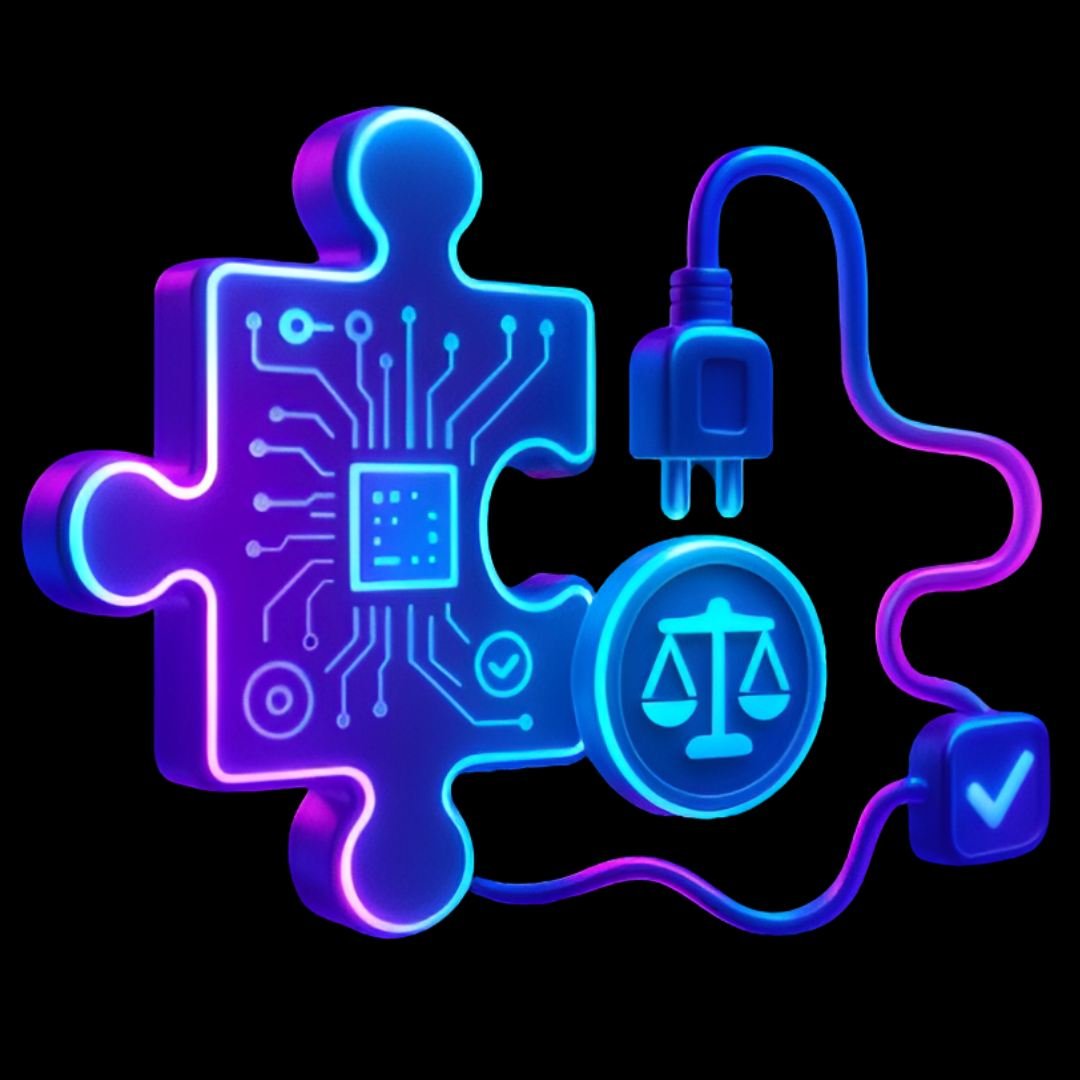
Any project can deploy a turnkey governance module in minutes: contract, interface, and bridge to its token included. No more excuses — decentralize day one. 🚀
🎮 Gamified DeFi Rewards
Voting earns soul‑bound NFTs or extra yield in pools. Not altruism — vote to play, or you’re the NPC.
👾 Choose your role wisely, WAFFTer.

🎯 WAFFT Final Note
In the ’90s, lobbyists held the keys; now smart contracts run the game. Tomorrow, an AI will warn you if a proposal empties the treasury before you even spend gas. Learn the rules, participate, and don’t give away your power. If you don't vote, a bot will — and it'll pocket your rewards. 🗝️🤖
WAFFT mantra:
“The future of Web3 won’t be voted on tomorrow... it’s being programmed today.” 👾📜
🎯 Final Thoughts — Governance Tokens, the WAFFT Way
☆ Governance tokens have gone from DeFi curiosities to cornerstone assets of the on-chain economy. With them, we decide treasury policies worth billions of USD, draft open-source software laws in plain sight, and little by little, overcome voter apathy thanks to quadratic models and liquid delegation.
⚠️ But the challenge remains: whales and flash-loans can hijack votes if the community sleeps; multichain bridges expand the attack surface; and the regulatory shadow creeps closer while tokens flirt with being labeled “securities.”
🚀 Even so, the future looks like a battle already turning in our favor: AI that turns legalese into memes, votes that stream like Twitch chats, reputations that count as much as your wallet… and delegates who only get paid if they win for you. Corporate open-source governance is being written in real time — and your wallet is the keyboard.
Governing a DAO isn’t just about voting — it’s about defending your community’s value, block by block. 🛡️⛓️
WAFFT mantra final:
“Close Discord, open your wallet, and vote; the gas you spend today is worth more than the coffee elites sip while deciding for you. If you don’t use your on-chain megaphone, someone else will cash your rewards — and sell your future in a snapshot.” 🗳️☕💻

Wanna explore other token types taking over the crypto world? Don’t be shy—click away!  Below, you’ll find clickable names that’ll teleport you straight to each section. Still curious or looking for anything related to crypto, traditional finance, or economics? Hit up our search bar and find everything you need to level up your knowledge.
Let’s go!